
When people remember a concert, they often talk about the energy of the crowd, the performance of the artist, or the magic of the moment. But behind all of that are two critical elements that make the difference between a good concert and an unforgettable experience: Sound and Lighting.
As specialists in concert production in Bangalore, we’ve seen firsthand how these two elements transform events. Let’s break down why they matter so much.
1. Sound: The Heartbeat of a Concert
Without great sound, even the best performers can fall flat. Concert sound engineering is both an art and a science.
Key aspects of concert sound:
- Clarity: Every lyric and instrument should be heard distinctly.
- Balance: Vocals, bass, drums, and instruments must complement, not compete.
- Coverage: Whether you’re in the front row or at the back, the experience should be consistent.
In Bangalore, where venues range from open-air arenas to enclosed halls, designing the right sound map is critical. We use line array systems, subwoofers, and delay towers to ensure sound reaches every corner.
2. Live Mixing: The Invisible Performer
Behind the console is a sound engineer, constantly adjusting levels during the show. If the artist changes tone, if the crowd gets louder, or if an instrument dominates, the sound engineer adapts instantly.
This live mixing ensures that the artist’s vision is translated perfectly to the audience.
3. Lighting: Painting With Beams and Colors
Lighting isn’t just about visibility—it’s about emotion and atmosphere. Imagine a power ballad performed under a single spotlight, versus a high-energy EDM drop with strobe lights and lasers.
Lighting creates mood, drama, and connection.
Types of lighting we use in concerts:
- Spotlights: To highlight key moments or performers.
- Moving Head Lights: For dynamic effects.
- Wash Lights: To set the overall tone on stage.
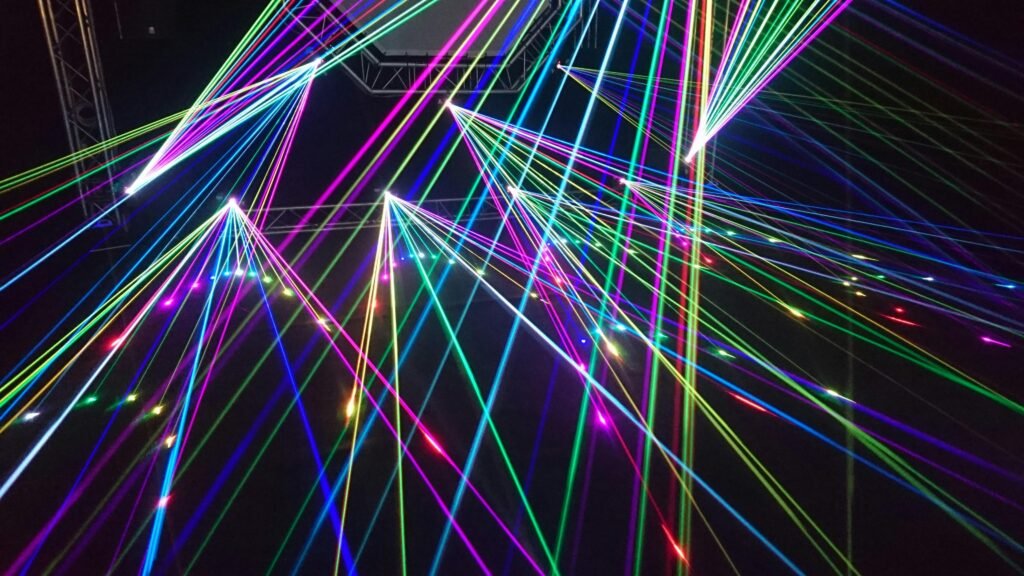
- Lasers & Special Effects: For high-energy performances.
4. Synchronization with Music
The real magic happens when lights and sound sync perfectly with the music. For example:
- A sudden blackout just before the bass drop.
- Bright strobes pulsing in sync with the beat.
- Warm amber tones for soulful acoustic sets.
This synchronization creates a multi-sensory experience that fans feel in their bones.
5. Enhancing Audience Engagement
Great sound and lighting don’t just support the artist—they pull the audience into the performance. Fans jump higher when the lights flash with the beat. They sing louder when the sound fills every corner. They feel connected when visuals and audio immerse them completely.
6. Challenges in Bangalore Concerts
Producing flawless sound and lighting in Bangalore isn’t without challenges:
- Outdoor venues often require careful planning to manage weather conditions.
- Power fluctuations mean strong backup systems are a must.
- Noise restrictions require precision in decibel control.
But with expertise and planning, these challenges turn into opportunities to innovate.
Conclusion
Sound and lighting are not side elements of a concert—they are the soul of the live experience. They elevate performances, mesmerize audiences, and turn ordinary events into legendary nights.